

K9/BK7 Glass
The Performance Breakthrough of K9 Glass in Extreme Environments
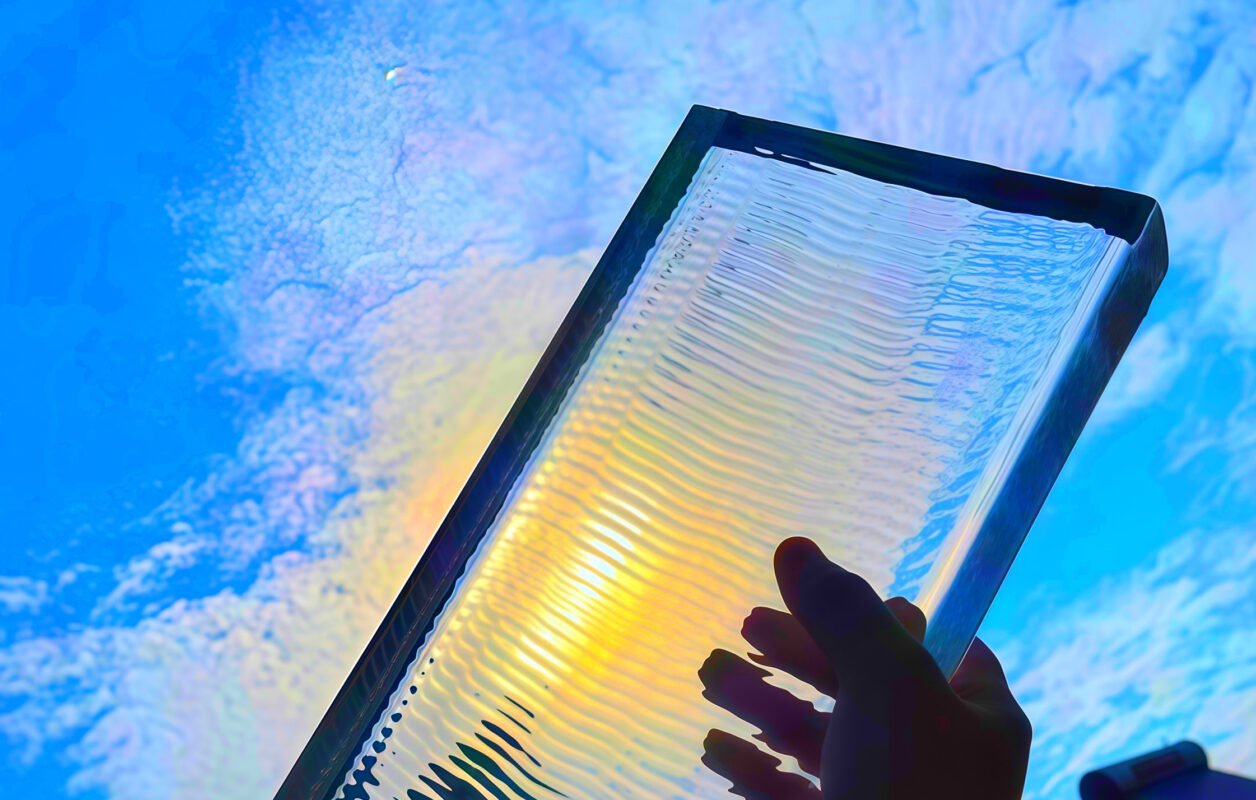
- The essential advantage of environmental adaptability
K9 glass, with its distinctive silicon-oxygen network structure, exhibits a degree of environmental tolerance that exceeds that of conventional glass. This molecular-level stability guarantees the maintenance of both exceptional optical performance and physical integrity under harsh conditions, including extreme cold, high temperature, and strong corrosion. Consequently, this renders the K9 glass the optimal choice for extreme environmental observation equipment.
- Practical value in extreme scenarios
- The field of space exploration
In the context of satellite optical systems, the utilization of specially treated K9 glass has been demonstrated to be an effective measure in resisting the detrimental influence of space radiation. The degree of attenuation of its light transmission performance is significantly lower than that of conventional materials, thereby ensuring clear imaging for deep space exploration.
- Deep-sea exploration equipment
The K9 glass observation window has been thickened and reinforced to ensure stable light transmission performance under deep-sea water pressure. In addition, it has been shown to be more resistant to seawater corrosion and microbial adhesion in comparison with traditional resin materials.
- Complex industrial environment
The K9 glass window, when treated with an anti-corrosion coating, has been shown to maintain high light transmittance when operating in the acidic gas environment of chemical plants over an extended period, thereby mitigating the risks associated with frequent replacement and the subsequent operational and maintenance challenges.
- Targeted process improvement
- Surface strengthening technology
A special ion treatment technology has been developed that results in the formation of a dense protective layer on the glass surface, thereby significantly enhancing its impact resistance. This technology is particularly well-suited to scenarios involving the impact of particles, such as sandstorms.
- Intelligent surface design
The imitation hydrophobic coating technology endows the glass surface with self-cleaning properties, which has the potential to reduce the adhesion of pollutants in extreme environments and lower the maintenance frequency.
- Multi-functional compatibility
The utilization of composite coating technology facilitates the compatibility of a solitary optical component with the penetration requirements of multi-band light, thereby enabling its adaptation to complex detection tasks.
- Typical application scenarios
- Polar scientific research equipment
The K9 glass optical components used in Antarctic research stations are unaffected by temperature fluctuations when working continuously in ultra-low temperature environments, ensuring optimal imaging quality.
- Development of geothermal energy
The K9 window, which is resistant to high temperatures, is fitted to the geothermal well monitoring camera. It can withstand the high temperatures and pressures deep underground, enabling real-time monitoring.
- Rail transit monitoring
The K9 glass optical probe in the high-speed rail sensing system maintains stable signals despite drastic temperature changes, thereby ensuring the safety of train operations.
From the depths of the ocean to the far reaches of space, the practicality and reliability of K9 glass continuously expands the possibilities for human exploration beyond the natural boundaries. The value of K9 glass lies not only in its physical properties, but also in its ability to enable precise observations in extreme environments. As technology advances, K9 glass will continue to play an irreplaceable role in increasingly specialized scenarios.