

Calcium Fluoride
Calcium Fluoride (CaF2) Glass: The Special Material for High-temperature Resistant Optical Windows
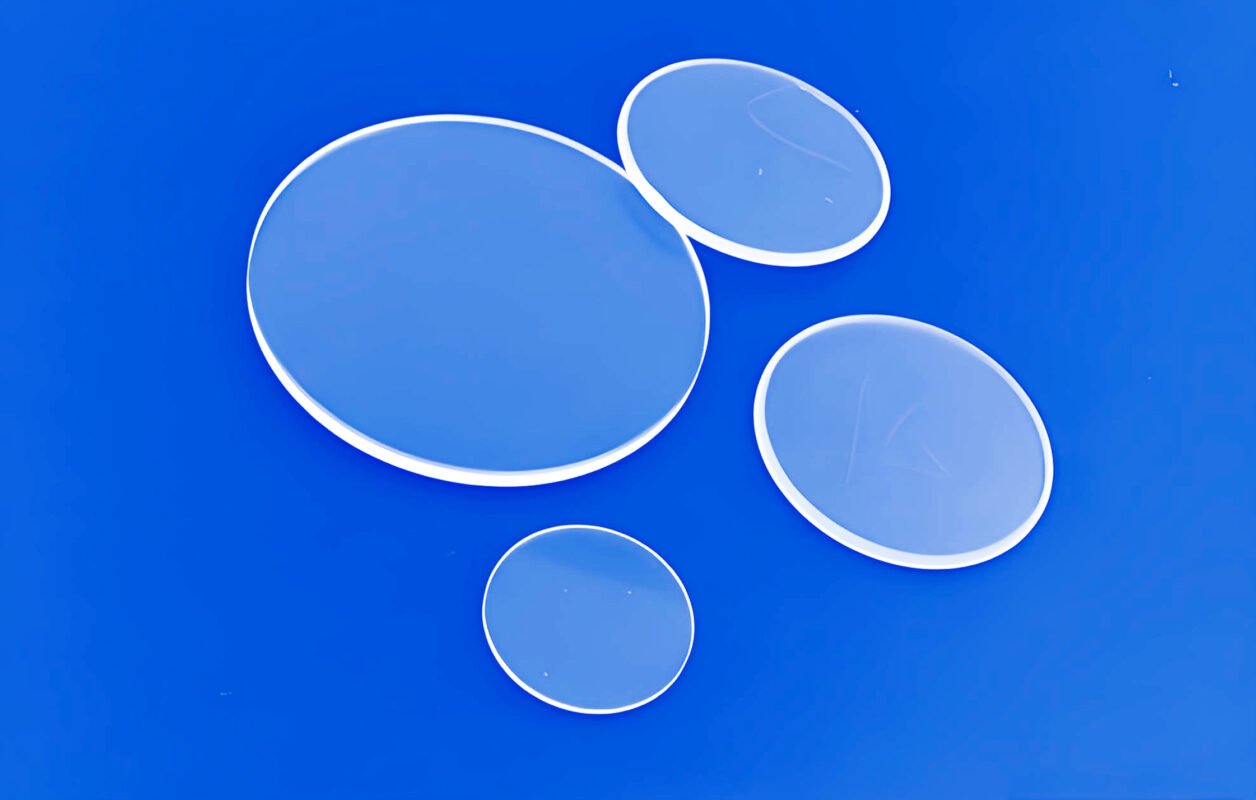
Calcium fluoride (CaF2) glass, a leading optical window material, plays an irreplaceable role in many fields due to its outstanding high-temperature resistance and excellent optical properties. This article will provide a comprehensive exploration of the distinctive attributes of calcium fluoride (CaF2) glass, elucidate its diverse applications in industrial contexts, and assist in gaining a more profound comprehension of this mysterious material.
- Introductionof calcium fluoride glass
Calcium fluoride glass, abbreviated as CaF2 glass, is a transparent optical material with calcium fluoride as its main component. It exhibits an exceptionally low refractive index, coupled with remarkable chemical stability and radiation resistance. These distinctive properties of calcium fluoride glass render it highly effective in the transmission of infrared light, thus finding extensive application in a variety of high-precision optical instruments.
CaF2 glass is distinguished by its ability to maintain consistent optical performance at elevated temperatures. This property is of particular relevance to equipment that must operate under extreme conditions, where stability and reliability are paramount. Regardless of the specific context, whether it pertains to military radar systems, lasers, or high-end scientific research instruments, CaF2 glass is an indispensable fundamental component.
- The optical properties and application scenarios of CaF2 glass
The reason why CaF2 calcium fluoride glass stands out among numerous optical materials is mainly attributed to its excellent optical properties. In addition to the low refractive index and high transmittance mentioned above, it can also effectively reduce the scattering and absorption of light, thereby improving the overall imaging quality of the system. In addition, CaF2 glass also features excellent mechanical strength and thermal stability, which enables it to withstand relatively high processing difficulties during the manufacturing process.
The extensive utilization of CaF2 glass in infrared imaging systems, space telescopes, semiconductor manufacturing equipment and other domains is attributable to the aforementioned advantages. In the aerospace and defence industries, in particular, its role is irreplaceable. The utilization of optical windows composed of CaF2 glass facilitates precise observations of distant galaxies by scientists, while engineers can develop more efficient and reliable laser processing equipment.
- How to correctly select and maintain CaF2 glass products
It is imperative that individuals seeking to utilize CaF2 glass to enhance their equipment possess a thorough understanding of the methodology required to accurately select and maintain this particular material. Firstly, it is imperative to pay close attention to the product parameters when making a purchase. This ensures that the product meets the requirements of specific applications. For instance, in the event of its utilization within a high-temperature environment, the heat resistance of CaF2 glass is the primary consideration.
Secondly, in order to ensure the long-term stable operation of CaF2 glass, it is vital that daily maintenance procedures are not neglected. Regular cleaning of surface stains, avoidance of physical collisions, and reasonable temperature control of the working environment are all effective ways to extend its service life. However, depending on the specific application scenarios, additional protective measures may be necessary, such as the installation of protective covers or the use of dedicated cleaning agents.
It is evident that CaF2 glass has played a pivotal role in the development of modern science and technology. This is primarily due to its outstanding optical properties and wide range of applications. The article is posited as a means of encouraging a more widespread recognition of the value of CaF2 glass and the full realization of its potential in practical applications.