

Others, Quartz Glass
Quartz glass-The “transparent cornerstone” in optics, driving the future of precision imaging
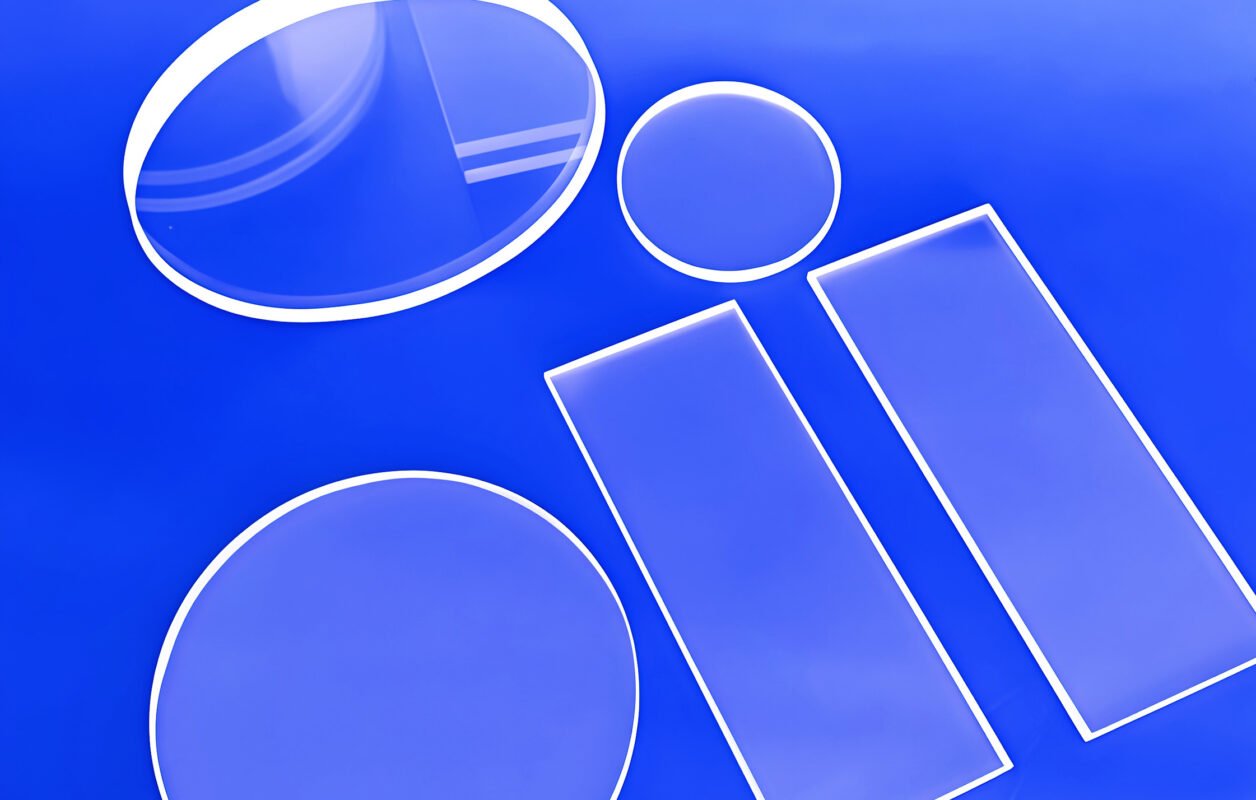
In recent years, with the rapid advancement of optical technology, applications ranging from microscopic observations in laboratory settings to deep space exploration via astronomical telescopes, and from precise medical diagnostics using imaging technologies to millimeter-level defect detection in industrial inspection, have increasingly relied on a critical material—quartz glass. Owing to its exceptional optical properties, this specialized material has become a fundamental component in the construction of modern optical systems, playing an indispensable role in a wide range of high-precision and cutting-edge optical applications.
The most notable benefit of quartz glass is its exceptional light transmission properties. In comparison with conventional glass, quartz glass consists of a single component of high-purity silicon dioxide, and the internal impurity content is meticulously regulated at an exceptionally low level, thereby ensuring minimal light absorption or scattering when light passes through. The transmission of light, whether visible, ultraviolet or infrared, is consistently maintained within quartz glass. This full-spectrum transparency feature makes it an ideal choice for precision optical instruments.
In addition to its exceptional light transmittance, the remarkably low coefficient of thermal expansion of quartz glass is pivotal to ensuring the stability of optical equipment. The optical system is extremely sensitive to temperature changes. Minor thermal expansion and contraction can cause lens deformation and optical path shifts, affecting the imaging quality. Quartz glass has an extremely low coefficient of thermal expansion and can maintain its shape stability even in situations where temperature fluctuates significantly. This characteristic is especially significant within the field of laser technology. Laser windows and resonant quartz cavities can maintain precise dimensions and shapes in high-temperature environments, ensuring stable output of laser energy. This is also an essential prerequisite for the successful implementation of precision processing technologies, such as laser cutting and laser welding.
In the domain of medical optics, the chemical stability and biocompatibility of quartz glass render it an “invisible guardian” that ensures the accuracy of diagnosis. Optical components in medical devices such as endoscopes are required to withstand prolonged contact with human tissues or testing reagents, in addition to chemical deterioration during the disinfection process. Quartz glass boasts extremely strong corrosion resistance to most acids and alkalis, with the exception of hydrofluoric and hot phosphoric acid. Its performance remains consistent, even in high-temperature and high-pressure disinfection environments. Therefore, the optical lens of the endoscope is made of quartz glass, allowing it to clearly transmit images of lesions in the body. Additionally, it is notable for its ability to withstand long-term use without decreased light transmittance, providing reliable diagnostic value for medical professionals. In the field of dentistry, the light guide rod of the curing lamp, crafted from quartz glass, facilitates the efficient transmission of ultraviolet rays, thereby ensuring the complete curing of dental fillings. This guarantees the treatment effect and extends the service life of the equipment.
The development of optical technology towards greater precision and miniaturization has led to higher requirements for the processing accuracy of quartz glass. The physical stability of quartz glass makes it a suitable material for advanced processing techniques, such as non-contact laser cutting. The cut surface is smooth and flat, allowing it to be directly assembled without secondary polishing, thus greatly improving the production efficiency and yield of optical components. The combination of processability and high performance has enabled quartz glass to find wide application in consumer electronics and intelligent driving, for example in mobile phone camera modules and automotive radars, thus promoting continuous improvement in optical performance in various smart devices.
From research laboratories to industrial manufacturing facilities and medical diagnostic environments, quartz glass, leveraging its distinctive performance characteristics, has established a robust foundation for advancements in optical technology. As the high-end manufacturing sector continues to evolve, demands for enhanced optical precision, thermal stability, and long-term durability are steadily increasing. Serving as the “transparent cornerstone” of the optical domain, quartz glass is poised to play a pivotal role across an expanding array of applications, enabling a future of clearer, more accurate, and highly reliable imaging systems.