



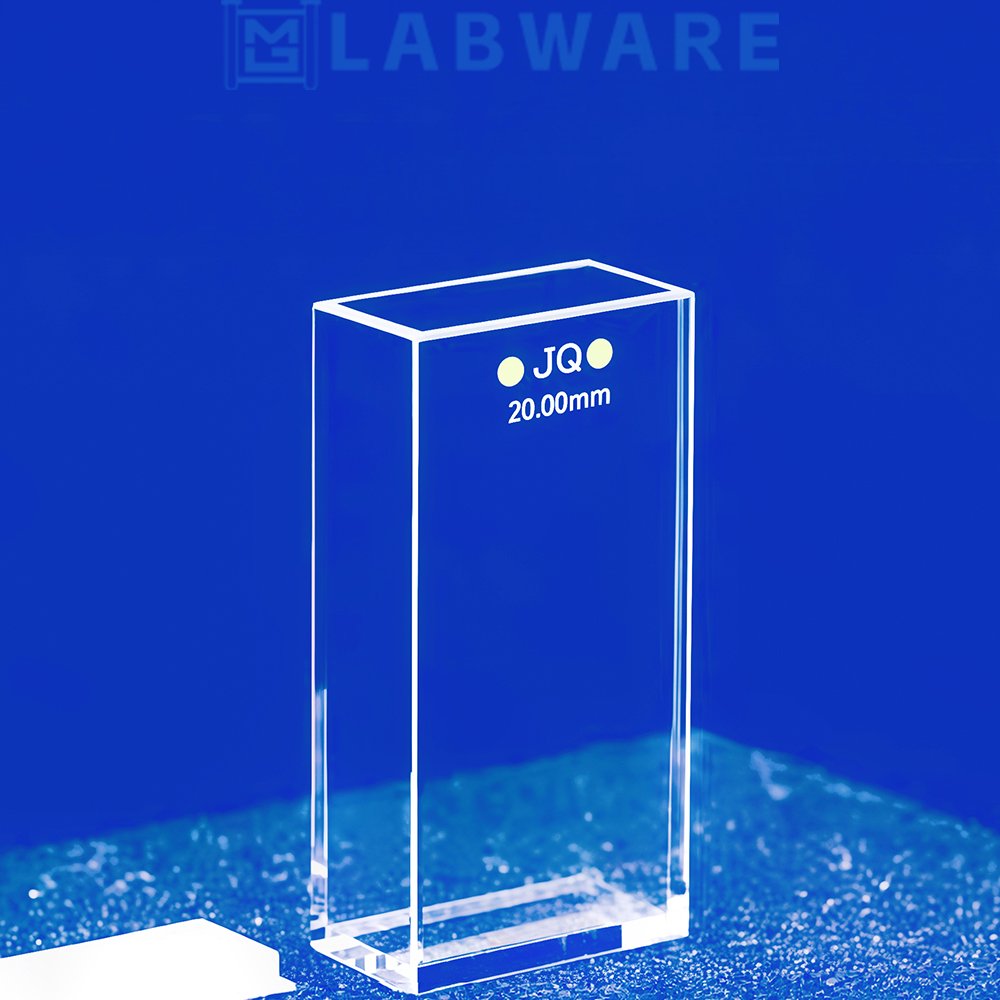
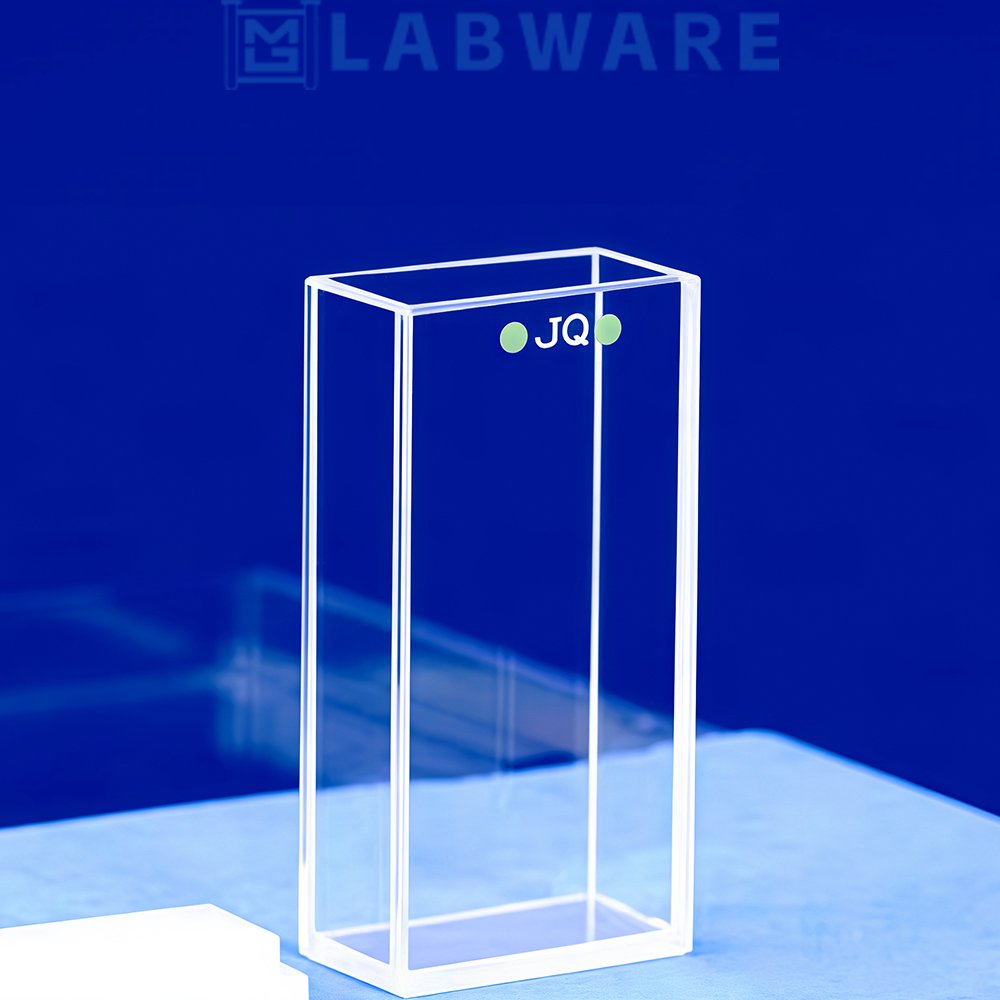
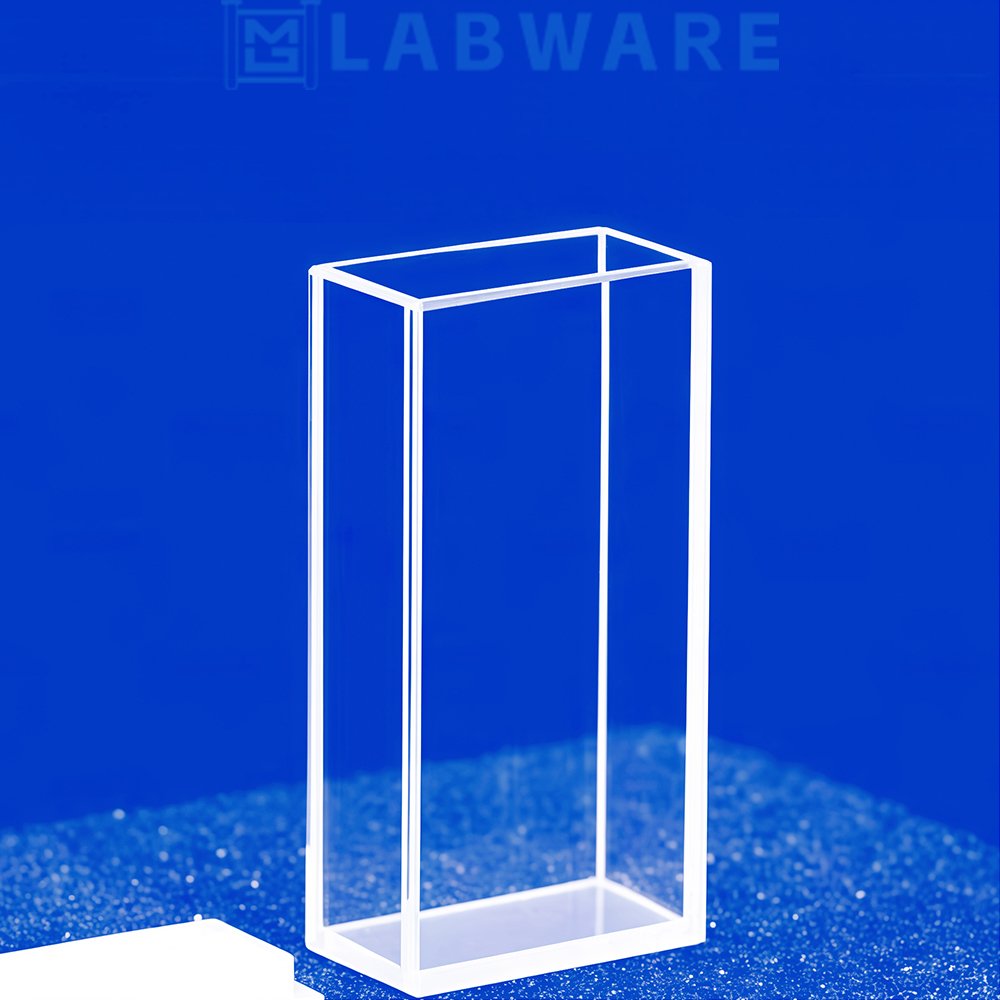
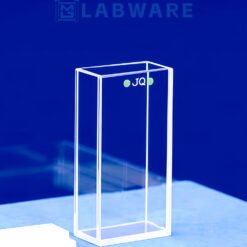
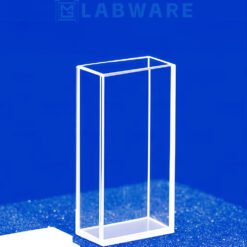
20mm Optical Quartz Cuvettes with High Transmission
Price range: $10.00 through $260.00
- Type: 20mm Optical Quartz Cuvettes with High Transmission
- Made of: 99.999%SiO₂
- Feature: strong acid & alkali resistance/high transmission
- Order Processing Time: 3 to 5 work days
- Customization:available
- Item NO.: M6313121
Size: 12.5mm x 22.5mm x 45mm
Capacity: 7ml
Light Path Length: 20mm
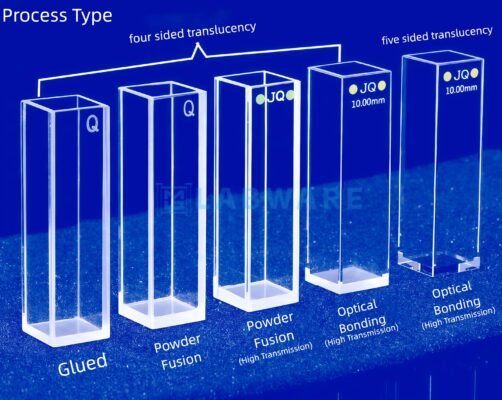
Processing type: Glued/Powder Fusion/Optical Bonding/four & five sided translucency
Wavelength Range: 200nm~2500nm
Packing List: cuvette x 1pc, teflon lid x 1pc
Capacity: 7ml
Light Path Length: 20mm
Processing type: Glued/Powder Fusion/Optical Bonding/four & five sided translucency
Wavelength Range: 200nm~2500nm
Packing List: cuvette x 1pc, teflon lid x 1pc
————————————————————————————————————————————————————
Our optical quartz cuvettes are precision-engineered for superior performance in spectrophotometry and analytical laboratory applications. Manufactured from high-purity fused silica, these cuvettes offer exceptional transmission from the ultraviolet to near-infrared spectrum (190-2500 nm). Featuring polished transparent windows and frosted sidewalls, they ensure minimal light loss and maximum accuracy for reproducible results. The scratch-resistant construction is compatible with standard 10mm light path instruments. Ideal for DNA/RNA analysis, kinetic studies, and quantitative research, our cuvettes deliver reliability and clarity for demanding scientific environments. Available in various path lengths and volumes.
The differences between the glued, powder fusion, and optical bonding processes for cuvettes.
Glued, powder fusion, and optical bonding are the three core manufacturing processes for cuvettes. The main differences lie in the bonding method and the resulting product performance and lifespan. Simply put, the quality and price increase progressively from glued to optical bonding.
| Process Type | Definition and Principle | Core Characteristics | Advantages | Disadvantages |
| Glued Process | Uses organic adhesives (such as epoxy resin) to bond the optical quartz pieces together. | Organic adhesive bonding, with a bonding interface. | Lowest cost, inexpensive, suitable for routine or disposable tests with low precision requirements. | Poorest performance: Not resistant to strong acids, strong alkalis, or organic solvents (adhesive is easily corroded), unreliable at high temperatures, and has a short lifespan. May have background absorption in the UV range, affecting measurement accuracy. |
| Powder Fusion Process | Fills the seams between quartz pieces with low-melting-point quartz glass powder, then heats them to a high temperature, melting the powder to “weld” the pieces together. | Inorganic material “welding” ; essentially still a type of bonding, with a seam formed by the glass powder. | Good value for money: Resistant to acids, alkalis, and organic solvents, much more durable than glued cuvettes. It is the most widely used process on the market currently. | Risk of leakage: There is a very small potential for leakage at the seams over long-term use or with poor quality manufacturing. Not resistant to high-intensity ultrasonic cleaning. |
| Optical Bonding Process | The contact surfaces of the quartz pieces are polished to optical flatness and then brought into direct contact. They initially bond via intermolecular forces (van der Waals forces), and then high-temperature heat treatment causes molecules at the interface to interdiffuse, eventually fusing into one piece without any adhesive. | Molecular fusion, no interface, truly monolithic construction. | Best performance: Virtually no risk of leakage, extremely strong corrosion resistance and high-temperature tolerance, can withstand ultrasonic cleaning. Excellent optical path consistency, no adhesive interference, the top choice for high-end research and analysis. | Most expensive, complex process, high technical requirements. |
Quartz Glass Features–
Physical Properties:
It has an extremely low coefficient of thermal expansion (~5.5 x 10⁻⁷/K), granting exceptional resistance to thermal shock. Its softening point is above 1650°C, and it can be used continuously at 1100°C. Quartz glass is highly transparent across a broad spectrum, from deep ultraviolet (UV) to near-infrared (IR). It possesses high dielectric strength and excellent electrical insulation properties even at elevated temperatures.
Chemical Properties:
The material is chemically inert to most substances. It has outstanding resistance to weathering and demonstrates low reactivity with acids (except hydrofluoric and hot phosphoric acid) and molten metals. Its high purity results in minimal contamination in sensitive processes. However, it is susceptible to devitrification (crystallization) at prolonged high temperatures, which can degrade its thermal and optical performance.
| Weight | N/A |
|---|---|
| Type | 20mm,Glued,Four Sided Clear, 20mm,Powder Fusion,Four Sided Clear, 20mm,Optical Bonding/High Transmission,Five Sided Clear, payment for customization |
Be the first to review “20mm Optical Quartz Cuvettes with High Transmission”
Related products

Quartz Glass
High Purity Quartz Glass Square Cylinders Tanks for Industrial Furnaces & Processing & UVC
Price range: $10.00 through $920.00
Price range: $85.00 through $150.00
Price range: $10.00 through $600.00
$10.00
Price range: $10.00 through $70.00
Price range: $10.00 through $220.00
Quartz Glass
Half-Height Quartz Glass Square Cylinders Tanks for Industrial Furnaces & Processing & UVC
Price range: $10.00 through $500.00
Price range: $10.00 through $70.00
Reviews
There are no reviews yet.